
Begin with the condition of the door, not a shopping list
A gap can be easy to notice and difficult to describe precisely. Before ordering a replacement strip, separate two questions: is the door operating normally, and what part of the closed opening is letting light, air or water through? Treat a sudden change in movement as a service concern rather than a weatherproofing project. A photograph of the bottom edge cannot establish whether the lifting system is safe.
Only make observations when the door is already fully closed and stable and you can remain outside its travel path. Do not operate a suspect door to obtain a better picture. Keep hands, tools and children away from the bottom edge and moving hardware. A door that hangs unevenly, has a loose cable or will not complete normal travel needs professional assessment before any seal decision.
Describe the gap as you see it
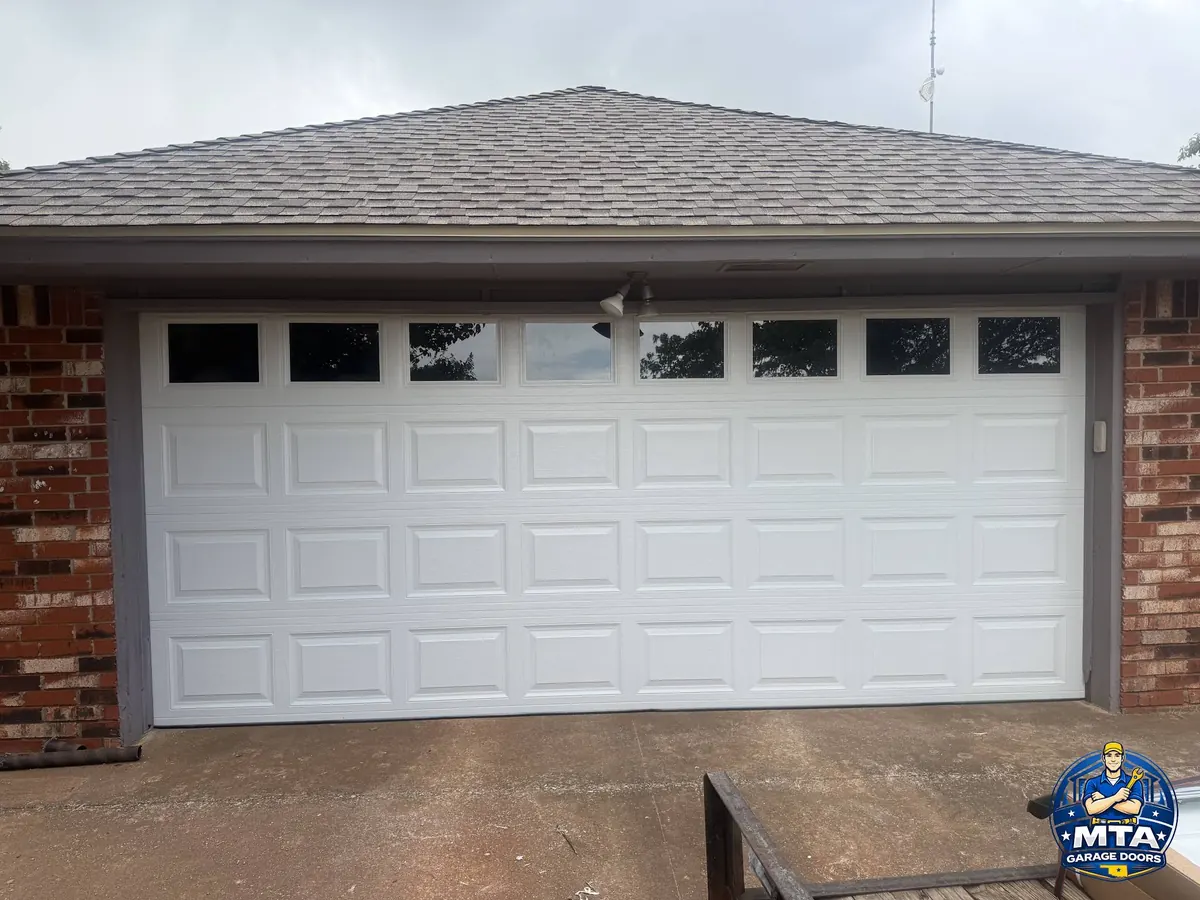
For an Edmond service request, a short description can help organize the inspection without guessing the cause. Note whether the opening appears at one corner, across the middle, along most of the width or around the sides. Say whether you noticed daylight, a draft, debris or moisture. These observations are not interchangeable: water on the floor does not, by itself, identify the entry point or prove that a bottom seal failed.
State when you first noticed the condition and whether it followed an impact, recent service or a change at the driveway. If you do not know, say unknown. Do not recreate a leak with a hose or cycle the door repeatedly to test a theory. One photograph from a safe standing position may be enough to explain your concern; leave close measurements and inaccessible labels for the inspection.
Keep the seal, its attachment and the opening in the discussion
The visible flexible strip is only part of the proposed repair. Ask the technician to identify the door and the way its seal attaches before specifying a replacement. The condition of the retainer and bottom section matters to the scope, as does the relationship between the door and floor. An estimate should make clear whether it covers a strip alone or additional work, and why those items are proposed.
Clopay’s weather-stripping guide describes different materials and notes that the appropriate choice depends on the door and conditions. That is a useful reason to request a compatible specification, not a reason to assume every product fits your opening. Ask how the proposed part is identified and what limitations remain after installation. Do not choose solely by the length or a similar-looking online photograph.
Do not use the opener to squeeze away a gap
Increasing closing force or changing travel to press the door harder against the floor is not a homeowner fix for an unexplained gap. Do not bypass a sensor, loosen a bottom bracket, alter a cable or adjust a spring to make the edge look level. The DASMA safety and maintenance guide reserves work on high-tension components for trained door-system technicians and emphasizes the instructions for the actual equipment.
Tell the technician about a repeated reversal or new resistance even if your main concern is a draft. Ask for the operating condition to be assessed separately from the weather-seal condition. A closed-looking door is not proof that the opener’s safety functions, balance or lifting hardware are correct. Keep any unresolved operating concern on the work record instead of treating a cosmetic improvement as a complete repair.
Ask what the proposed work can and cannot address
Before approving service, ask which observed condition the proposal is intended to address. Request the product description, included labor, any required retainer or section work and the applicable warranty terms. If the opening or floor needs attention outside the door-service scope, ask who should assess it and which limitation will remain. Do not interpret a seal quote as a promise to correct every source of water, air or temperature change in the garage.
For a planned replacement door, raise these questions before ordering rather than at final handover. The opening, floor interface and proposed sealing details belong in the installation discussion alongside the door specification and compatible hardware. Compare the written scope of competing proposals instead of assuming that every estimate includes the same preparation or finishing work.
Keep a useful completion record
After the work, ask what was replaced, what was retained and whether any opening condition still needs attention. Keep the product information, invoice and care instructions together. Have the technician explain the required operational and safety checks, the outcome and any restriction on use. Follow the installed equipment’s instructions rather than a universal maintenance schedule from a different door model.
If the concern returns, describe the new observation and refer to that record. A different corner gap, a new noise and moisture after rain are different reports; avoid grouping all three under the same assumed diagnosis. This makes follow-up more useful without asking you to investigate loaded hardware yourself.
Questions homeowners often ask
Does daylight under the door mean the entire door needs replacement?
Not necessarily. Daylight identifies an opening, not the repair scope. Ask for an assessment of the seal, attachment, section and opening before comparing a focused repair with a replacement door.
Can I identify the correct seal from a photo?
A photograph can describe a concern, but it does not confirm every dimension, attachment detail or underlying condition. Keep any product choice provisional until compatibility and the work scope are checked.
What if the door is also crooked or reversing?
Stop using it and request assessment. Do not adjust force or loaded hardware to close the visible gap. Use the urgent-service guidance if the opening is unsafe or cannot be secured.
Plan an assessment in Edmond
Review MTA’s installation planning page when comparing a new door, or maintenance and inspection service for an existing system. Contact the Edmond team with the location of the gap and any operating changes. Availability and the appropriate scope are confirmed directly; a website request is not a booked appointment.