
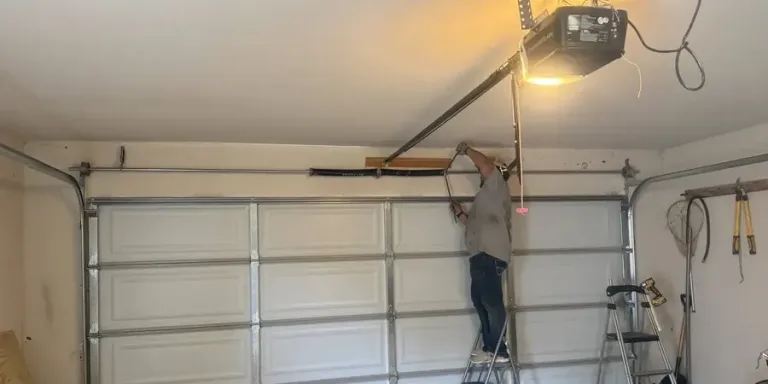
Give the routine a clear boundary
This checklist helps an Edmond homeowner prepare observations and questions. It is not a repair procedure or a substitute for manufacturer-required safety testing. Looking at a door, testing its operation and adjusting its components are different activities. Finding nothing unusual during a brief look does not establish correct balance, cable tension or a working reversal system.
Use the instructions for the actual door and opener. DASMA’s garage door system safety guidance recommends regular checks and professional service and emphasizes model-specific instructions. If a procedure is unclear, or you cannot safely carry it out, ask a trained door systems technician to perform it and explain the result.
Build a small record before there is a problem
Keep the door and opener manuals, previous service paperwork and any model information already available together. The door and opener may be different brands and different ages; the opener label alone does not identify replacement door parts. Do not climb or reach near moving or loaded components simply to find a label. An installer can help identify equipment during a visit.
For a home with two openings, label your notes by opening rather than writing only garage door. Record the date, the concern and whether it is new, intermittent or unchanged. If you do not know the installation date or service history, write unknown. A short accurate record is more useful than an assumed age or a guessed repair diagnosis.
Observe without moving closer to the hardware
Only make observations from a safe location with the door already fully closed and stable. Do not operate a suspect door just to put it into that position. If it is open, crooked or otherwise unstable, keep clear and request service instead. Do not touch cables, springs, brackets, rollers or fasteners during this visual check.
- Door face: note a new dent, crack, bent section or broken window without pressing on the damaged area.
- Alignment: describe any visible change in how the door sits in the opening; do not try to straighten it.
- Visible hardware: report a hanging cable, obvious spring separation or displaced component from where you can safely see it.
- Surroundings: identify stored items that could obstruct access, but do not retrieve anything caught beneath the door or in its hardware.
DASMA’s building-occupant damage guidance says not to proceed to an operating inspection when a problem is visible. You do not need a close-up photograph or a second demonstration to justify asking for an assessment.
Separate appearance care from an operating concern
A question about cleaning a sound door finish belongs with the instructions for that finish. A question about a cracked section, shifting attachment or changed movement belongs with a service assessment. Record both if necessary, but do not let a planned cleaning task become an attempt to correct a mechanical problem.
Amarr’s care and maintenance guidance distinguishes surface care, visual checks and operating tests. It also makes clear that lubrication instructions vary by component. Do not apply one product to everything or assume lubricant will correct an unexplained change. Confirm the approved product, application points and safe procedure for your equipment before any care task; ask for help when these are uncertain.
Use what you already noticed, without recreating the fault
If you noticed a sound or hesitation during ordinary use, write down where in the travel it occurred and which control you were using. Distinguish an observation such as a new scrape near the top from an assumption such as a failed motor. Include a recent impact, power interruption or change in controls if one actually occurred; leave it out if you do not know.
Do not cycle the door again to make a recording. A sudden bang, loose cable, crooked position or new lifting difficulty means stop use and keep people and vehicles clear. Do not pull the manual release on a suspect or partly open door, lift it to judge its weight, tighten a bottom bracket or increase opener force to overcome resistance.
Make a maintenance appointment more useful
Tell the service team whether this is planned care for a normally operating door or a change that has already interrupted use. Describe the door’s current position and whether you have another safe way into the property. Ask what access the technician needs before moving stored items. Never move a vehicle through an unstable opening just to clear the work area.
Request an explanation of the findings before approving additional work. Ask which condition needs correction now, which items are observations to monitor, and which manufacturer instructions apply afterward. Keep the written scope, parts identification if work is performed, and follow-up contact information with your existing records. No fixed repair, price or replacement interval follows from this checklist alone.
Questions to settle at handover
- Which door and opener models do the supplied instructions cover?
- What did the inspection find, and what work was authorized and completed?
- Which operating and safety checks were performed, and were any concerns left unresolved?
- Which routine tasks are suitable for the homeowner, with what precautions?
- What change should prompt stopping use and calling again?
Ask for a clear explanation if a recommendation is described only as a tune-up. The term does not identify the inspection, parts, adjustments or testing included. A maintenance record should describe actual work, not imply that every part was replaced or that future failure has been ruled out.
Choose the next page for the actual concern
For planned care, see Edmond garage door maintenance service. For a visible spring gap or lifting change, use the spring inspection and repair page. An unstable or unsecured opening calls for the emergency service page. You can also send your observations to MTA; keep entry codes and other private access information out of messages and photos.