
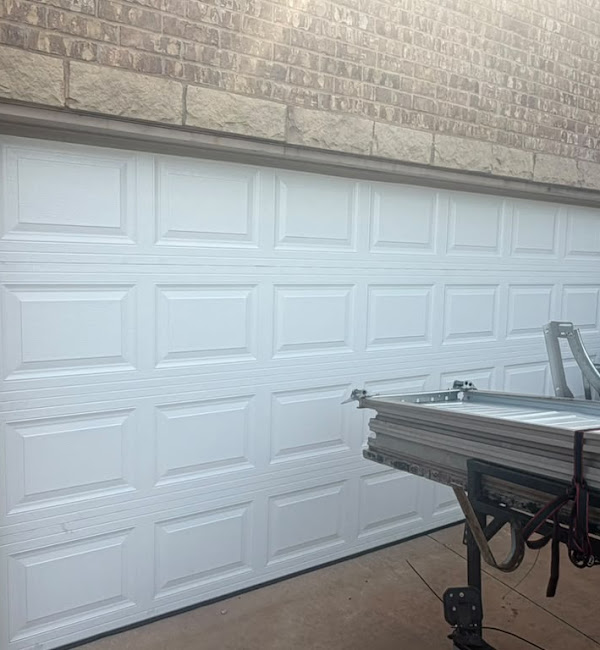
Start with structure, not just the size of the dent
A shallow dent in the middle of a section may behave differently from damage that crosses a panel edge or joint. Inspect how the section sits when the door is closed and how it changes shape during movement. A bowed section can place additional load on hinges, rollers, tracks, and the opener.
Stop operating the door if the damage causes binding, loud impact, widening side gaps, a roller approaching the track edge, or visible movement around a hinge or bracket.
When replacing one section may be practical
- The damage is limited to one section and the remaining sections are structurally suitable.
- A compatible section is available for the door model, width, height, profile, and joint design.
- Hinges, rollers, tracks, reinforcement, springs, cables, and opener remain appropriate for the repaired door.
- The expected difference in color, texture, and weathering is acceptable.
- The repair restores smooth, balanced, and secure operation.
Section replacement is not based on appearance alone. The replacement must fit the existing door system and the door should be rechecked for balance and safe travel.
Why a matching panel can still look different
Even when a compatible section is available, the new finish may not match material that has been exposed to sun, weather, cleaning products, or normal aging. Door profiles, embossing, insulation, window layouts, and manufacturer designs can also change over time.
Before choosing a one-section repair, compare the likely visual result with the cost and condition of the full system. Painting may be an option for some finishes, but coating compatibility and manufacturer guidance should be confirmed.
When full garage door replacement deserves comparison
- Several sections are bent, cracked, separating, or no longer align.
- A compatible replacement section is unavailable or the expected match is poor.
- The tracks, rollers, hinges, springs, cables, seals, or opener also need substantial work.
- The current door no longer meets insulation, light, privacy, window, or exterior-design goals.
- Damage has changed the opening fit, security, or weather sealing.
Replacement planning should include opening measurements, framing, headroom, side room, track layout, door weight, spring design, seals, windows, and opener compatibility. A new door is a complete operating system, not just a different exterior surface.
Repair-versus-replacement questions to ask
Does the door move correctly now?
Movement reveals whether the damage is isolated or affecting hardware and alignment. Do not keep cycling a door that rubs, jerks, binds, or changes shape.
Is a compatible section actually available?
Confirm the model, dimensions, section profile, joint design, insulation, reinforcement, and finish. A section with similar dimensions is not automatically compatible.
What condition is the rest of the system in?
Tracks, rollers, hinges, springs, cables, seals, and the opener influence the value of a panel-only repair. A broader system review can prevent a cosmetic decision from overlooking an operating problem.
What result matters most?
Security, safe movement, weather sealing, insulation, light, privacy, and appearance may carry different importance for each property. Define the required result before comparing options.
Do not push or hammer a loaded door section
Trying to reshape a section while it remains connected can affect joints, reinforcement, hinges, rollers, glass, or hardware. Do not remove hinges or bottom fixtures from an assembled door without understanding the loads attached to them.
What final testing should confirm
After a section repair or door replacement, the system should be checked for section alignment, roller travel, track clearance, cable tracking, spring balance, controlled manual movement, opener limits, force, photo eyes, reversal, and secure closing. The repaired or replacement door should not depend on excessive opener force to move.
Frequently asked questions
Can every dented garage door panel be replaced separately?
No. A separate section depends on compatible parts, the condition of the remaining door, structural fit, hardware, balance, and the expected finish match.
Does a dent always make a garage door unsafe?
Not every dent affects operation, but damage near joints, hinges, rollers, reinforcement, cables, or bottom fixtures can change movement or structure. The door should be evaluated if it binds, bows, or moves unevenly.
Can I keep my current opener with a replacement door?
Possibly, if its condition, lifting capacity, rail arrangement, controls, and safety features are compatible with the new door and the door is properly balanced.
Property owners in Edmond and MTA’s confirmed Oklahoma City metro service areas can compare garage door panel replacement with complete garage door installation. Review maintenance and safety checks, then contact MTA Garage Doors with wide and close photos of the damage.