
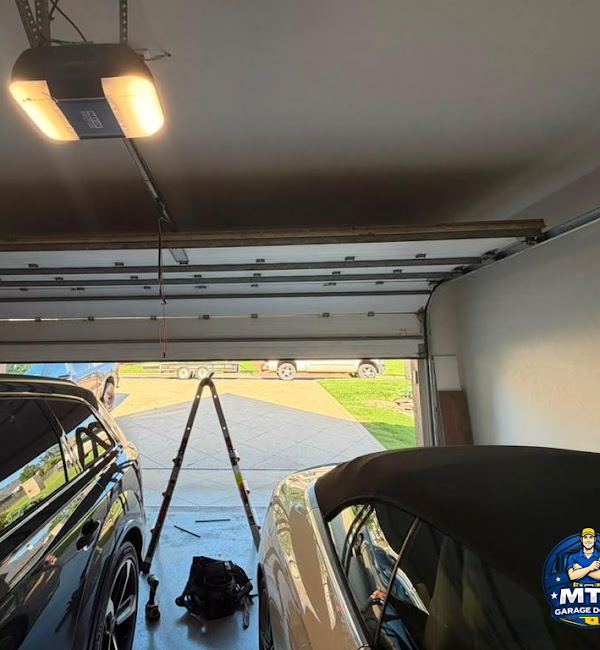
First separate an opener problem from a door problem
The opener supplies controlled movement, but the door must still travel freely and remain balanced. A blocked photo eye can stop an otherwise normal door from closing. A bent track, displaced roller, broken spring, loose cable, or damaged section can also make the opener stop or reverse because the door is not moving correctly.
Watch one attempt from a safe location. Note whether the motor runs, whether the door starts moving, how far it travels, and whether one side moves differently. Stop after that observation if movement is uneven or hardware looks displaced.
Safe checks that do not bypass protection
Confirm power and compare the controls
Check whether the opener light and wall control have power. Compare the wall button, remote, and keypad. If one control works and another does not, the issue may involve the individual control, battery, programming, lock mode, or signal rather than the door mechanics.
Look at the photo eyes from outside the door path
Photo eyes are normally mounted low on both sides of the opening. An object, dirt on a lens, a shifted bracket, damaged wire, or inconsistent indicator light can interrupt the closing signal. Clear ordinary objects and gently clean an accessible lens, but do not tape, bypass, relocate, or electrically alter the safety devices.
Check for an obvious obstruction
Look along the floor, threshold, tracks, and door path for tools, debris, stored items, or ice. Do not reach into a track or under a moving door. If something is caught in loaded hardware, leave it in place and request service.
Notice locks and manual hardware
A manual slide lock or other door hardware can prevent movement if it is engaged while an automatic opener is connected. Do not keep operating the opener against a locked or blocked door.
When the problem is more than a sensor
- The door is crooked, jerks, or moves faster on one side.
- A roller is outside the track or near the track edge.
- A cable is loose, crossed, or visibly frayed.
- A spring has a visible separation or the door suddenly feels heavy.
- A section bends or a hinge pulls away while the door moves.
- The opener rail, trolley, or attachment point moves abnormally.
These signs call for a complete door-and-opener inspection. Adjusting opener force to overpower mechanical resistance can hide the symptom and add load to the opener or door hardware.
Why a door may close only while the wall button is held
On some systems, holding the wall control changes how a closing command is handled when the safety circuit reports a problem. That behavior is useful diagnostic information, but it is not permission to keep operating the door that way. Record the indicator-light pattern and request service for the photo eyes, wiring, controls, or opener logic.
Travel limits and force settings
If the door reaches the floor and reverses, the opener may be reacting to its travel position, floor contact, seal compression, or resistance in the door. If it stops before the floor, travel setup or a mechanical restriction may be involved. Do not increase force or repeatedly change limits without confirming that the door is balanced and travels freely.
What a complete diagnosis should include
The technician should compare the reported behavior across controls, inspect the photo eyes and wiring, and then evaluate door balance, springs, cables, rollers, tracks, hinges, sections, opener rail, trolley, travel, force, manual release, and safety reversal. The goal is to identify whether the opener is receiving a false safety signal or correctly responding to a door problem.
Frequently asked questions
Can sunlight affect garage door photo eyes?
Strong light can contribute to sensor behavior on some setups, but alignment, brackets, wiring, lens condition, and the opener’s indicator pattern should be checked before the cause is assumed.
Should I disconnect the opener and close the door by hand?
Do not release or move a door that is open, crooked, unusually heavy, off track, or showing a loose cable or spring problem. A manual-release step is not appropriate until the door is in a safe condition.
Why does the door reverse with nothing underneath it?
The safety circuit may see an alignment or wiring issue, or the opener may detect resistance from the door, track, floor contact, or travel setup. The safety and mechanical systems should be evaluated together.
For service in Edmond and MTA’s confirmed metro areas, review garage door opener repair, track and roller repair, or garage door maintenance. If the opening cannot be secured or the door is unstable, visit the 24/7 repair page.