
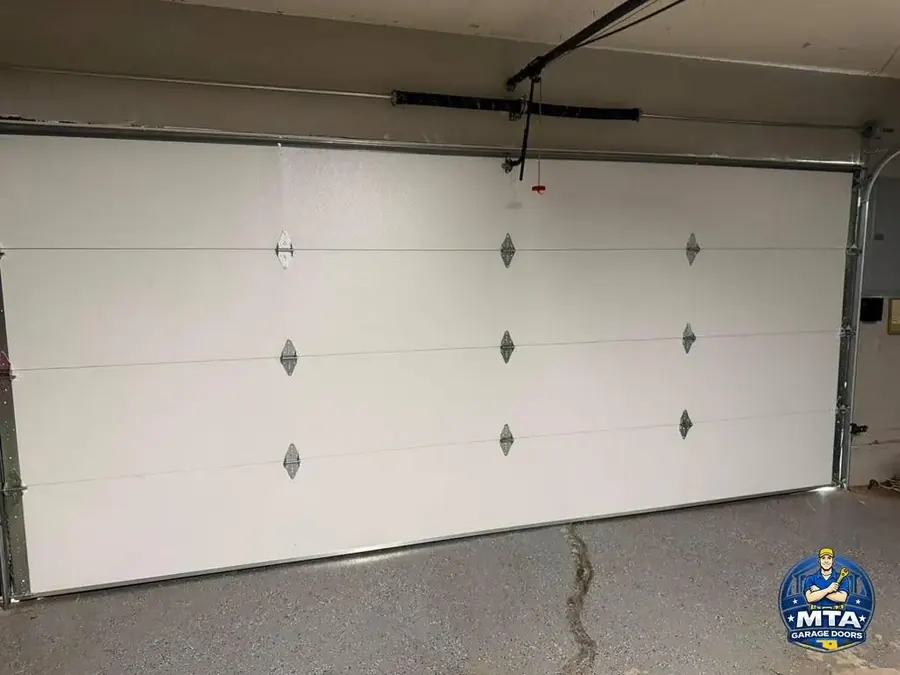
Watch one controlled attempt only when the door is stable
If the door is already crooked, partly hanging, off track, unusually heavy, or showing a loose cable, do not operate it again. When the door remains level and no loaded hardware looks displaced, one observation from a clear location may help describe where the movement changes. Keep the entire door in view and stay outside its path.
Note whether the shaking begins near the floor, in the middle of travel, or as the top section enters the curved track. Observe whether both sides move together, whether the opener rail moves, and whether the sound is a light rattle, repeated clicking, grinding, or a hard impact. Stop immediately if the door tilts, binds, drops, or a roller approaches the track edge.
Worn or damaged rollers can interrupt smooth travel
Rollers guide each section through the vertical and horizontal tracks. A roller that is worn, damaged, seized, loose, or partly displaced may not rotate and track normally. The door can vibrate as the roller drags, changes direction, or passes a damaged area.
Do not place fingers in the track or try to push a roller back while the door is connected and loaded. Look for a roller that sits differently from the others, a stem that shifts excessively, or new marks inside the track. Roller condition should be checked together with hinges, tracks, section alignment, and door balance.
Track alignment and mounting affect the door path
Vertical tracks, curved sections, horizontal tracks, brackets, and supports must guide the door without pinching or allowing excessive movement. A shifted bracket, impact, loose mounting point, or bent track can change clearance. One side may encounter resistance before the other, creating a shake or sideways movement.
Do not loosen track brackets or strike the track to change its shape. The door and spring system can load those components differently at each position. A roller outside the track, a visible track separation, or a door that is closer to one side requires an off-track and alignment inspection before more operation.
Loose hinges or section damage can create repeated movement
Hinges connect the sections and guide how the door bends through the curve. Loose fasteners, cracked hinge areas, missing reinforcement, or a bowed section can allow motion between parts that should remain controlled. The vibration may be strongest as a damaged joint changes direction.
Do not remove hinges from an assembled door or tighten hardware attached to a visibly damaged section without understanding the load. Look for widening gaps, pulled fasteners, torn metal, or a section that changes shape while moving. Compare isolated section damage with the panel repair-or-replacement checklist.
Spring balance and cable tension can make movement uneven
The springs and cables help both sides of the door rise together. A broken spring, incorrect balance, cable wear, drum problem, or changing tension can make the opener pull against a door that is heavier or uneven. Shaking may appear with slow starts, sudden releases, or different movement on the left and right sides.
Do not perform a manual balance test when the door is crooked, unusually heavy, or showing displaced lifting hardware. Do not touch springs, drums, cables, bottom brackets, or winding hardware. A visible spring gap or loose cable means operation should stop and the relevant spring repair or cable repair service should evaluate the system.
The opener can add vibration or reveal door resistance
A loose opener mount, moving rail, worn drive component, trolley problem, chain or belt condition, or door-arm connection can create vibration. The opener may also shake because it is trying to move a door that no longer travels freely. Replacing or adjusting the opener without checking the door can leave the actual resistance in place.
Compare wall control, remote, and keypad behavior, but do not increase force or travel to push through binding. Note whether the motor sounds normal, whether the rail moves, and whether the trolley and door travel together. The garage door opener service page explains why door balance and opener operation should be diagnosed as one system.
Small rattles and serious jerking are not the same symptom
A light rattle can come from loose non-loaded hardware, normal section movement, or vibration transferred through the door. A hard jerk, sudden speed change, sideways pull, grinding roller, moving track, loose cable, or dropping motion is more urgent. The important difference is whether the door remains level, stable, and controlled.
Do not use lubricant as a universal diagnosis. The correct product and application points depend on the door and manufacturer instructions, and lubricant will not correct a bent track, broken spring, loose cable, damaged roller, cracked hinge area, or opener mounting problem. Cleaning or lubricating visible parts should never require reaching into tracks or loaded hardware.
Information that helps a complete diagnosis
- The door position where shaking begins and whether it repeats at the same point.
- Whether both sides rise together or one side leads.
- Whether the symptom occurs with the wall control, remote, and manual movement when manual testing is safe.
- Any recent impact, new noise, spring bang, cable change, opener work, or section damage.
- Wide photos of the door, tracks, upper hardware, and opener taken from a safe floor position.
A professional review may include tracks, rollers, hinges, sections, reinforcement, springs, cables, drums, shaft supports, door balance, opener mounting, rail, trolley, drive, controls, travel, force, photo eyes, and reversal. Correct testing verifies smooth movement across the full travel path rather than only at the point where the shake was noticed.
When to stop using a shaking garage door
Stop immediately when the door is crooked, a roller leaves the track, a cable is loose or crossed, a spring shows a gap, a section separates, the opener rail moves, or the door drops or accelerates. Keep people, pets, and vehicles away. Do not stand under the door, pull the emergency release, or attempt to support it with objects.
If the door remains level and stable but has developed a mild new vibration, schedule an inspection before the movement becomes more severe. The garage door maintenance page covers inspection, lubrication, balance, and safety testing without assuming that every noise requires the same repair.
Frequently asked questions
Why does my garage door jerk near the top?
The top section, rollers, curved track, hinges, opener arm, travel setup, or door balance may behave differently as the door changes from vertical to horizontal travel. The exact cause should be identified before adjustments are made.
Can I tighten the tracks to stop shaking?
Do not loosen or reposition track brackets while the door is loaded. Track clearance and alignment affect roller travel, and an incorrect change can create binding or allow a roller to leave the track.
Will lubricating the garage door fix jerking?
Lubrication can support normal maintenance at approved points, but it will not repair a damaged roller, bent track, loose cable, broken spring, bowed section, or opener problem. Diagnose the movement first.
For shaking, jerking, or uneven garage door movement in Edmond and MTA’s confirmed Oklahoma City metro service areas, review the garage door maintenance service or request a door-and-opener inspection. If the door is crooked, unstable, or unable to secure the opening, use the 24/7 repair page and stop operating it.