
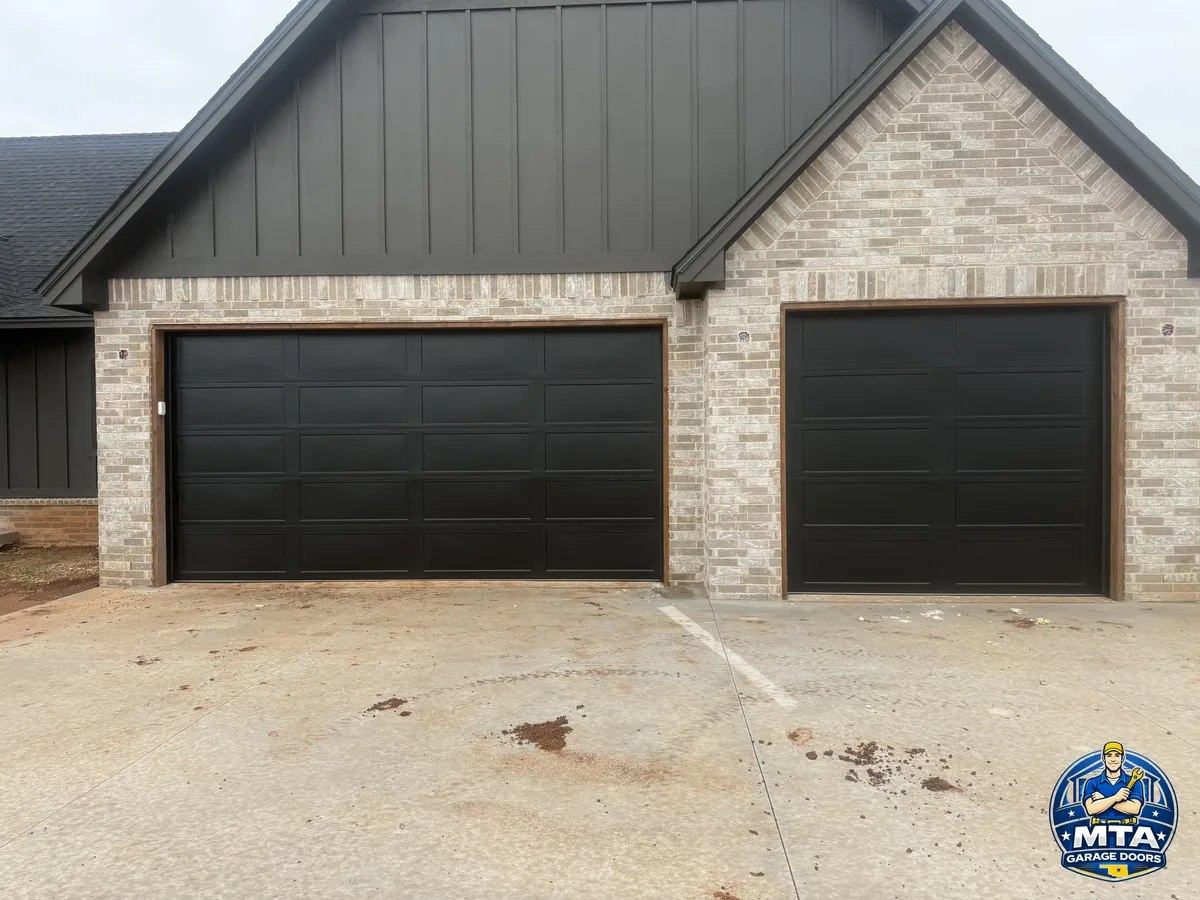
Does a new garage door add value?
A new garage door can support a home’s marketability in several ways: it can improve the exterior presentation, remove visible wear, create smoother operation, and give a buyer clearer information about the door and opener system. Those benefits may contribute to perceived value, but the financial result depends on the property, neighborhood, product, installation quality, existing door condition, and local market. It is better to plan the project around fit and usefulness than to rely on a universal return-on-investment promise.
The National Association of REALTORS® included garage door replacement in its 2022 Remodeling Impact Report. That report describes homeowner enjoyment, durability priorities, and resale considerations, but it does not make every house or project equivalent. Use broad remodeling research as context, then compare the actual door, opening, budget, and plans for the property.
Why curb appeal starts with proportion and fit
The garage door should look intentional next to the roofline, siding or masonry, trim, windows, entry door, and driveway. A door that is visually disconnected from the house can still look like an afterthought even when it is new. Begin with the width and height of each opening, the number of doors, the home’s architectural lines, and the amount of contrast already present on the exterior.
A wide double door usually has more visual weight than a single door. Strong colors and window patterns will therefore affect the front elevation differently across the two sizes. Ask to see a drawing or visualization that shows the selected panel pattern, finish, windows, and decorative hardware in the actual opening proportions rather than choosing from a small sample alone.
Door condition can influence buyer confidence
Appearance matters, but a buyer or homeowner also notices how the door moves. A door that shakes, binds, scrapes, leaves uneven gaps, or depends on excessive opener force suggests that the complete system needs attention. Fresh panels do not solve incorrect tracks, unsuitable springs, damaged framing, or an incompatible opener.
A replacement plan should cover the door sections, reinforcement, tracks, rollers, hinges, springs, cables, seals, opener connection, photo eyes, controls, and final balance and reversal tests. Clear product documentation and an understandable maintenance plan can be more valuable than cosmetic changes that leave operating questions unresolved.
Choose a style that belongs on the home
Panel design and finish
Traditional raised panels, carriage-inspired designs, flush modern sections, and other patterns create different shadow lines. Compare the door in daylight and shade, and consider how the finish relates to the home’s permanent materials. A coordinated neutral door can blend into the elevation, while a darker or contrasting door can become a focal point.
Windows, light, and privacy
Windows can connect the garage door to windows elsewhere on the house and bring natural light into the garage. Their height, shape, grid pattern, glass type, privacy, added weight, and effect on insulation should be confirmed before ordering. Review the exact section layout so the window position is not assumed from a catalog image.
Decorative hardware
Handles, straps, and other decorative pieces can reinforce a carriage-house look, but they should fit the selected design rather than crowd it. Confirm whether each item is decorative or functional and whether it affects clearance, maintenance, or the written product scope.
Insulation should match how the garage is used
Insulation can be relevant when the garage is attached to living space, used frequently, or expected to feel more finished. Compare the documented construction and thermal information for the actual door model instead of assuming that every insulated door performs the same way. Section thickness, insulation material, joints, seals, windows, installation, and the surrounding garage construction all affect the result.
Insulation also changes door weight and construction, so the spring system and opener compatibility must match the selected door. Choose it because it supports the way the space is used, not because a label alone is expected to determine resale value.
Do not treat the opener as a separate afterthought
The opener should move a correctly balanced door; it should not supply the lifting force that belongs to the spring system. Before keeping an existing opener, record its model, rail arrangement, controls, safety sensors, condition, and compatibility with the new door’s height, weight, reinforcement, and travel. If a new opener is planned, include the complete installed configuration in the comparison.
Automatic residential garage door openers are covered by a federal entrapment-protection standard. The U.S. Consumer Product Safety Commission identifies 16 CFR Part 1211 as the applicable standard. Photo-eye operation, travel, force, reversal, controls, and manual-release instructions should be verified before the new system returns to daily use.
When repair may be the better value
Replacement is not automatically the right decision. A compatible section, seal, roller, hinge, opener control, or other targeted repair may restore a door that otherwise fits the opening and the homeowner’s needs. Repair can be worth comparing when damage is limited, matching parts are available, the remaining sections and hardware are suitable, and the finished result will be acceptable.
Replacement deserves a closer look when several sections are damaged, corrosion or separation is widespread, compatible parts are unavailable, the current door no longer supports the desired insulation or design, the opening requires a different configuration, or repeated repairs still would not address the complete system. Review the panel repair versus replacement guide before assuming that one visible dent decides the whole project.
Build a useful written comparison before ordering
- Exact product: door model, dimensions, section construction, finish, panel design, windows, and decorative hardware.
- Complete operating system: tracks, springs, cables, rollers, hinges, reinforcement, seals, opener connection, and safety devices.
- Opening conditions: framing, headroom, side room, back room, floor, electrical supply, lighting, storage, and ceiling obstructions.
- Project scope: removal, disposal, delivery, installation, setup, cleanup, documentation, and final testing.
- Future support: maintenance guidance, product documents, and the process for identifying compatible replacement parts.
Compare proposals line by line. Two doors that look similar in a small image may use different section construction, insulation, hardware, reinforcement, glazing, or opener components. The written scope is what makes the comparison useful.
Final checks that protect the investment
Before the project is complete, inspect the exterior alignment, section spacing, trim, perimeter and bottom seals, window arrangement, finish, and visible hardware. Operate the door through several full cycles from a safe position. Movement should be level and controlled, rollers should follow the tracks cleanly, cables should track correctly, and the opener rail and attachment should remain stable.
Confirm manual operation according to the manufacturer instructions, opener travel and force, photo-eye response, safety reversal, wall control, remotes, keypad, manual release, and secure closing. Ask which visual checks the homeowner should perform and which symptoms should stop further operation. A door that looks better but does not move safely and consistently is not a complete upgrade.
Frequently asked questions
Will a new garage door guarantee a higher selling price?
No. A replacement can improve appearance, function, and buyer confidence, but the selling price depends on the full property, location, market, product, cost, installation, and buyer priorities. Avoid any promise of a fixed return.
Should the garage door match the front door?
It does not need to match exactly. The colors, panel lines, windows, trim, and hardware should look coordinated with the complete exterior. A deliberate contrast can work when it fits the home’s design.
Are windows a good choice for a new garage door?
Windows can add daylight and connect the door to the home’s architecture. Compare privacy, glass type, section layout, insulation, added weight, and replacement availability before choosing them.
Can I reuse my current opener?
Possibly. Compatibility depends on the new door’s weight, balance, height, reinforcement, track layout, the opener’s rail and controls, and its safety features. Confirm those details before the door is ordered.
Homeowners in Edmond and MTA’s confirmed Oklahoma City metro service areas can review the new garage door installation checklist and MTA’s garage door installation service. To compare repair and replacement for a specific opening, request an installation consultation or call (405) 554-3770.